Heavy LogisticsEngineered for theBiggest Challenges.
Heavy logistics company specialising in Over Dimensional Cargo (ODC), windmill transportation, project cargo, and heavy industrial logistics across India.
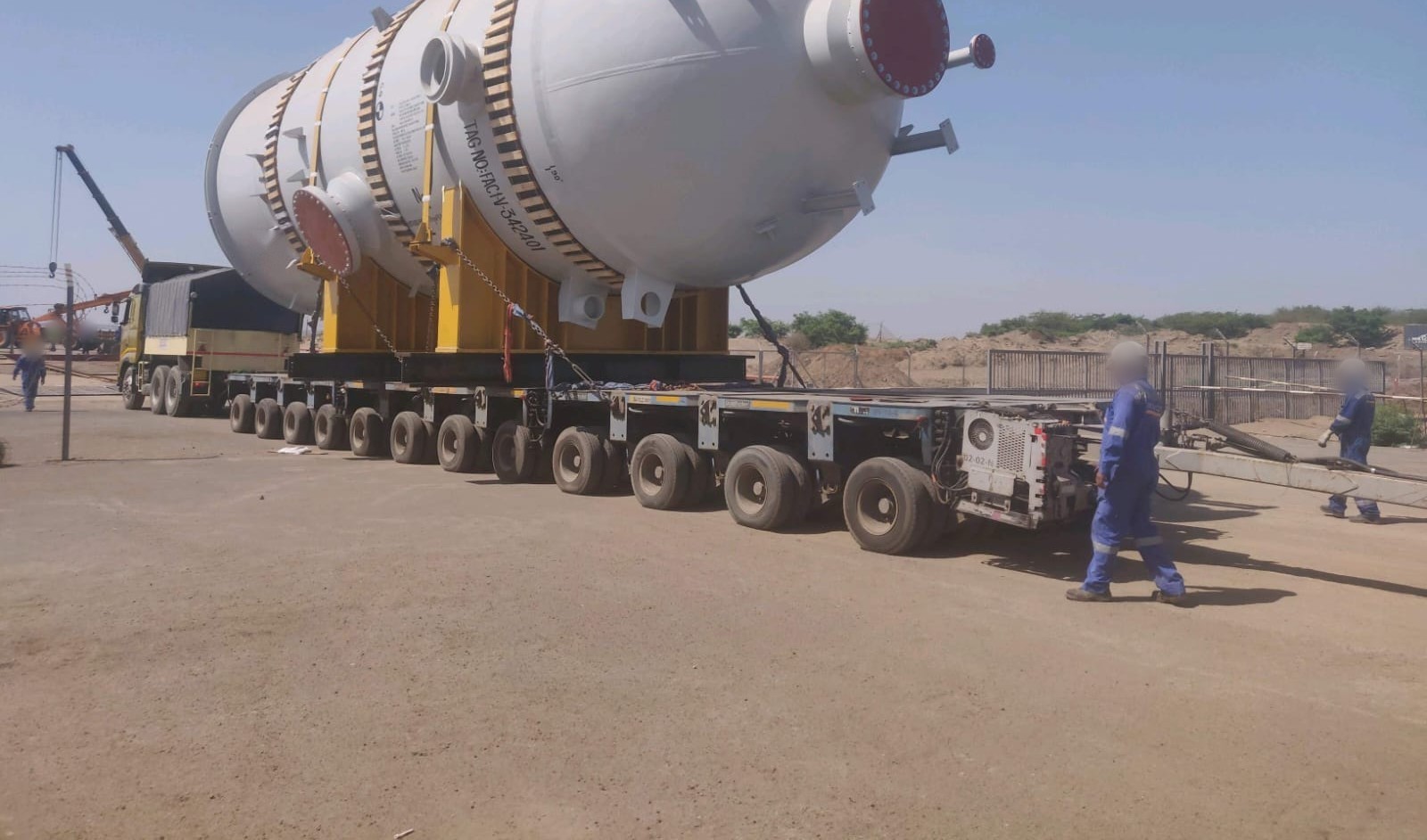
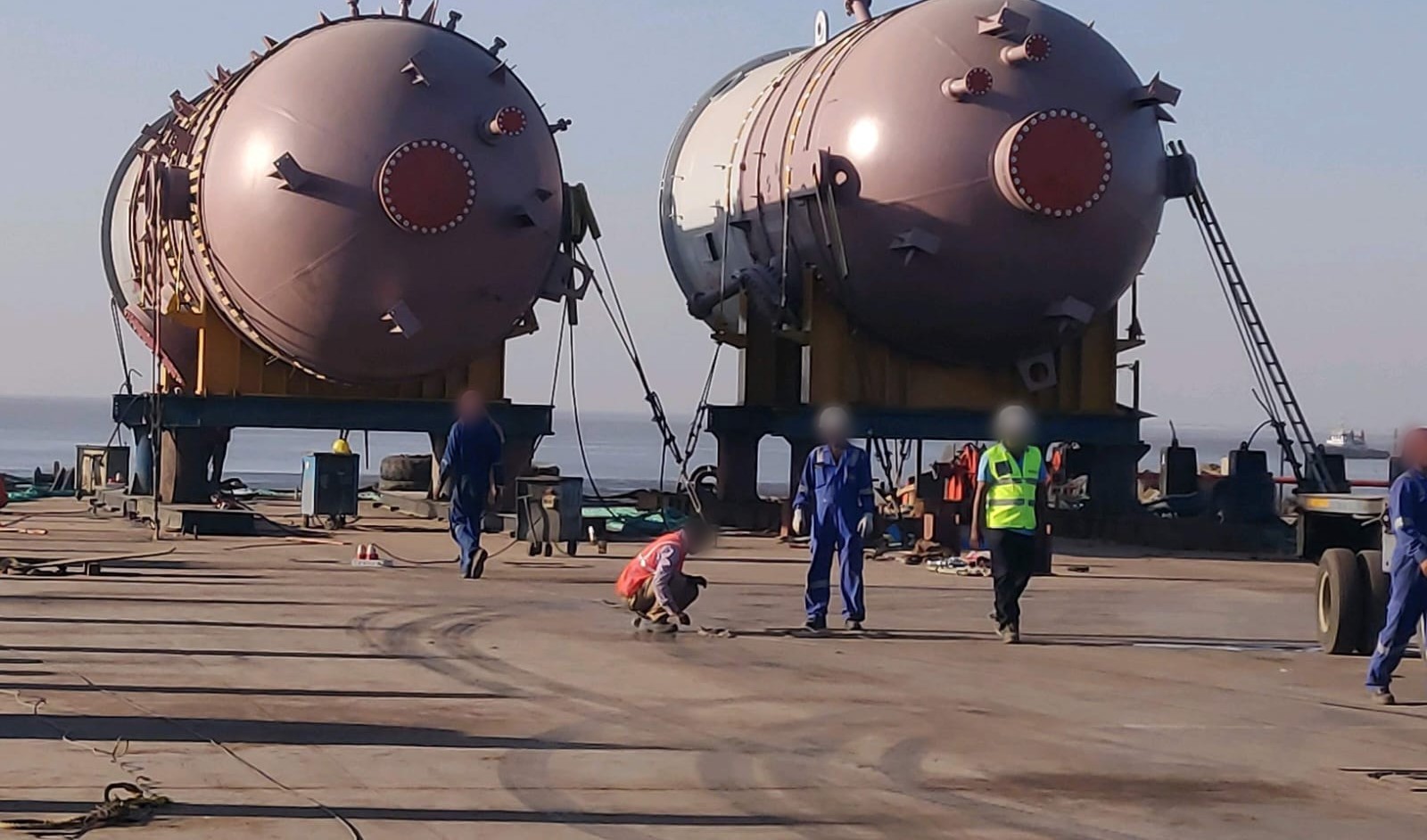
Pressure Vessel on Modular Transporter · Dahej, Gujarat
0+
Projects Completed
ODC & project cargo movements delivered
0+
States Covered
Across the Indian logistics network
0%
Fleet Availability
Specialised trailer readiness
0%
Client Satisfaction
Repeat industrial clients
Built to move what other carriers turn down.
ASLIN GLOBAL was established to become one of India's most trusted heavy logistics companies. We specialise in complex and oversized cargo that needs detailed route planning, specialised trailers, experienced operators, and seamless execution.
Our expertise covers complete logistics management for large industrial projects, renewable energy programmes, construction equipment and engineering cargo — delivered safely, on time, and without compromise.
Dahej, Gujarat
Pressure vessel on modular transporter
Our Vision
To become India's leading heavy logistics company by delivering specialised transportation solutions with innovation, reliability, and operational excellence.
Our Mission
To provide safe, efficient, and dependable logistics solutions for oversized and heavy cargo while building long-term partnerships through trust, quality, and professional service.
Specialised logistics, end to end.
Every service below exists because one part of an oversized movement can fail independently of the others — the trailer, the route, the permit, the escort. We run them as one chain.
Over Dimensional Cargo moves outside the legal envelope for width, height, length or weight. Every consignment is treated as an engineering problem first and a transport problem second: we model the cargo, survey the corridor, and only then commit to a route and a date.
- Dimensional & load feasibility study
- Axle-load distribution planning
- Corridor obstruction mapping
- State-wise permit sequencing
When the cargo is bigger than the rules.
Over Dimensional Cargo is defined by what it exceeds. Once a consignment passes any one of these four limits, the movement stops being a transport booking and becomes an engineering exercise.
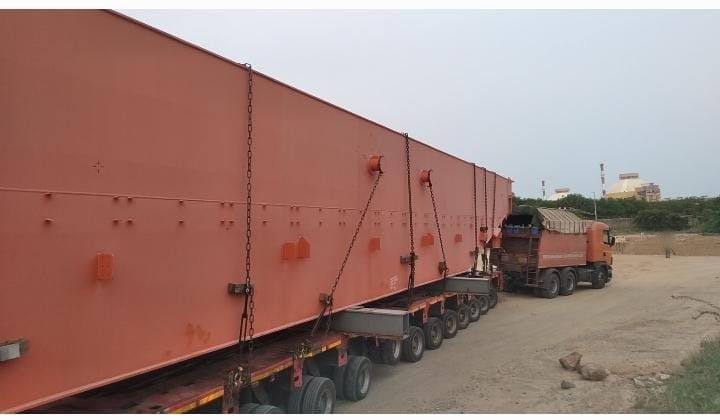
ODC · Project cargo
Structural module on multi-axle lines
Width
Beyond 2.6 m
Triggers escort requirements and restricts which lanes and shoulders the convoy can use.
Height
Beyond 4.2 m
Puts every gantry, footbridge, cable and flyover on the route into question.
Length
Beyond 18.75 m
Turning radii and roundabouts become the binding constraint, not straight-line distance.
Weight
Beyond 49 MT
Bridge capacity and axle-load limits determine the corridor before anything else does.
Thresholds shown are the general dimensions at which a consignment is treated as over-dimensional on Indian roads. Applicable limits vary by state, corridor and vehicle class, and are confirmed against the relevant authority during permit planning.
Equipment chosen by the cargo, not the calendar.
Trailer class is a planning decision, not a preference. Deck height buys vertical clearance; axle count buys bridge capacity; articulation buys rough ground.
Hydraulic Modular Trailer
Independently suspended axle lines that articulate over uneven ground while the deck stays level. Lines can be coupled side by side or end to end to build the exact platform a load needs.
- Axle lines
- 4 – 24+ (couplable)
- Payload
- Up to 400+ MT
- Deck height
- Hydraulically adjustable
- Steering
- All lines steerable
Typical configuration range for this trailer class. Exact equipment is confirmed per consignment after the route survey.
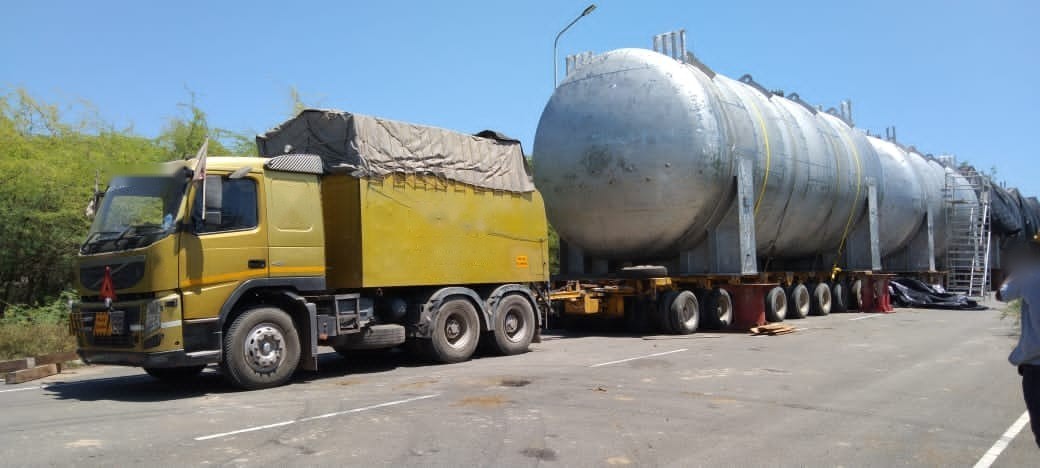
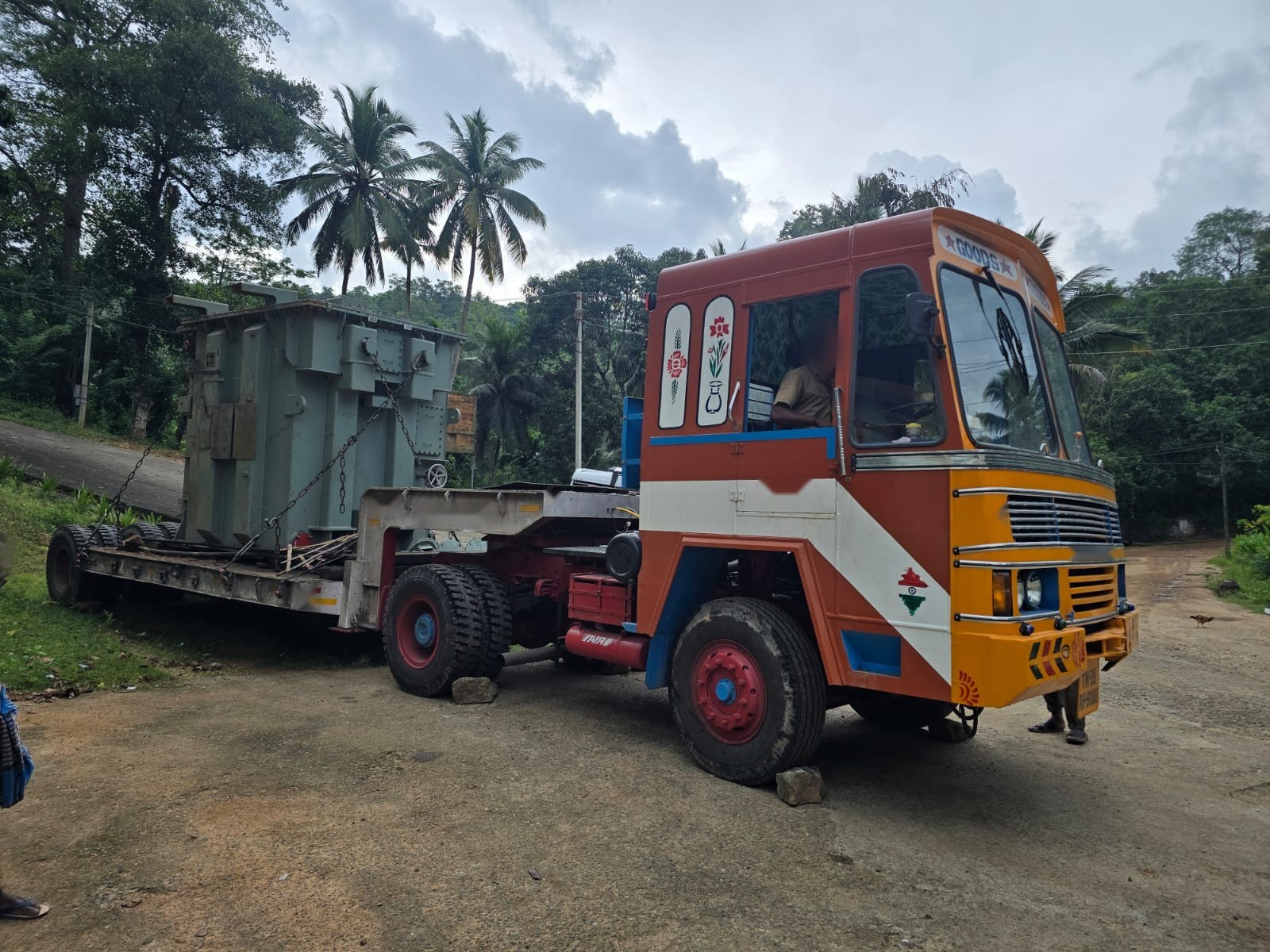
A column is one long piece of steel that cannot flex.
Process columns and vessels combine extreme length with almost no tolerance for bending stress. They ride on hydraulic axle lines that spread the load along the full deck, at speeds set by the corridor rather than the clock.
The hard part is rarely the highway.
Plants and substations sit where the project needs them, not where the roads are. The last few kilometres — gradient, camber, turning circles on narrow ghat roads — usually decide whether a movement is feasible at all.
Delivered in the order the crane needs it.
Vessels, columns and modules arrive sequenced to the lift plan, so the crane is never waiting on a trailer and cargo is never parked on site absorbing risk.
The sectors whose cargo does not fit.
Different industries break the standard transport envelope in different ways — length, mass, fragility, or sheer volume of consignments. Each one changes how the movement is planned.
Wind Energy
Blades · Towers · Nacelles · Hubs
Turbine components combine extreme length with tight handling tolerances, and wind farm sites are rarely near good roads. Movements are planned around site access as much as highway routing.
Renewable Energy
Generators · Transformers · Structures
Balance-of-plant equipment for renewable projects, sequenced to match commissioning milestones rather than arriving all at once.
Infrastructure
Girders · Segments · Launching gear
Bridge girders and precast segments are long, heavy and time-critical — the erection window usually dictates the delivery slot.
Construction
Cranes · Crawlers · Plant
Mobilising and demobilising heavy plant between sites, including tracked machines that cannot travel under their own power on public roads.
Engineering
Fabricated modules · Skids
Shop-fabricated modules move from the fabrication yard to site in the largest sections the corridor will allow, reducing field assembly.
Manufacturing
Machine tools · Presses · Lines
Production equipment relocations where downtime is the real cost and the schedule matters as much as the movement.
Corridors, not just destinations.
Heavy cargo moves along a small number of viable corridors between ports, fabrication hubs and project sites. Knowing which ones actually take the load is most of the job.
- Ports
- 11 mapped
- Industrial hubs
- 10 mapped
- Wind belts
- 5 mapped
Locations shown are the industrial hubs, ports and wind belts that oversized cargo moves between across India.
Eight steps, in the only order that works.
Each stage produces something the next one depends on. Skip the route survey and the permit application is a guess; skip the permit sequencing and the convoy stops at a state border.
- 01
Planning
Cargo is measured and weighed, the centre of gravity established, and the transport envelope defined. Everything downstream depends on getting this right.
- Produces
- Cargo dimension sheet
- Weight & CoG data
- Trailer selection
- 02
Route Survey
The corridor is driven and measured — clearances, bridges, turning radii, cables and gantries recorded as they actually are, not as the map shows them.
- Produces
- Clearance report
- Obstruction log
- Bridge capacity check
- 03
Permit Approval
State transport approvals, highway authority clearances and utility coordination are sequenced so every permit is valid on the day the convoy reaches that state.
- Produces
- RTO approvals
- Highway clearance
- Utility coordination
- 04
Cargo Loading
Supervised loading at origin with engineered lashing, packing and securing appropriate to the cargo and the road surface ahead.
- Produces
- Lashing plan
- Load photographs
- Securing sign-off
- 05
Transportation
The convoy runs to the surveyed route at controlled speed, with movement windows chosen around traffic density and restricted hours.
- Produces
- GPS tracking
- Daily position reports
- Speed discipline
- 06
Escort Coordination
Pilot and rear escorts clear pinch points ahead of the cargo and manage oncoming traffic, in continuous contact with the driver and coordinator.
- Produces
- Pilot vehicles
- Police liaison
- Convoy comms
- 07
Delivery
Site access is confirmed before arrival, and the cargo is set down under supervision at the designated position.
- Produces
- Site access check
- Supervised unloading
- Set-down confirmation
- 08
Successful Completion
Documentation is closed out and handed over — proof of delivery, route records and compliance evidence for the project file.
- Produces
- Proof of delivery
- Compliance records
- Project close-out
Heavy logistics is a planning discipline.
Anyone can put cargo on a trailer. What separates a completed movement from a stranded one is the work done before the wheels turn — and the accountability while they're turning.
Specialised ODC Expertise
Dedicated experience handling oversized and overweight cargo that falls outside standard road transport limits.
Safety First
Every shipment follows strict safety standards, verified route planning and documented compliance procedures.
Nationwide Operations
Movements connecting industrial hubs, ports, fabrication yards, project sites and renewable energy locations across India.
Experienced Team
Drivers, escort crews and logistics coordinators who have run complex heavy cargo corridors before.
Reliable Delivery
Committed schedules backed by realistic planning rather than optimistic estimates.
Project Logistics
Full coordination for multi-consignment industrial and infrastructure programmes.
Compliance
Permits, approvals and regulatory clearances managed as part of the movement, not as an afterthought.
GPS Tracking
Convoy position visibility throughout the corridor, from loading through to final delivery.
Dedicated Coordination
A named point of contact accountable for the consignment from pickup to handover.
Nothing moves until every box is ticked.
Safety on an oversized movement is not a briefing at the depot gate — it is the permit that is actually valid, the bridge that was actually surveyed, and the lashing that was actually signed off.
- Government permits and transportation approvals
- Route surveys and feasibility assessments
- Cargo securing and engineering standards
- Experienced drivers and logistics professionals
- Compliance with heavy cargo transportation regulations
- Continuous coordination until successful delivery
Continuous coordination is maintained until successful delivery.
Cargo that does not fit in a photograph either.
Project movements from live sites — pressure vessels, transformers, port load-outs and night convoys.
Tell us the cargo. We'll tell you the route.
Share the dimensions, weight, origin and destination — that is enough for us to tell you whether a movement is feasible and what it will take.
Maharashtra Office
Navi Mumbai – 410218, Maharashtra+91 22 4962 6364