The sectors whose cargo does not fit.
Different industries break the standard transport envelope in different ways — length, mass, fragility, or the sheer number of consignments. Each one changes how the movement is planned.
- Sectors
- 10 industries served
- Cargo
- Oversized & overweight
- Sites
- Ports, plants, project sites
The sectors whose cargo does not fit.
Different industries break the standard transport envelope in different ways — length, mass, fragility, or sheer volume of consignments. Each one changes how the movement is planned.
Wind Energy
Blades · Towers · Nacelles · Hubs
Turbine components combine extreme length with tight handling tolerances, and wind farm sites are rarely near good roads. Movements are planned around site access as much as highway routing.
Renewable Energy
Generators · Transformers · Structures
Balance-of-plant equipment for renewable projects, sequenced to match commissioning milestones rather than arriving all at once.
Infrastructure
Girders · Segments · Launching gear
Bridge girders and precast segments are long, heavy and time-critical — the erection window usually dictates the delivery slot.
Construction
Cranes · Crawlers · Plant
Mobilising and demobilising heavy plant between sites, including tracked machines that cannot travel under their own power on public roads.
Engineering
Fabricated modules · Skids
Shop-fabricated modules move from the fabrication yard to site in the largest sections the corridor will allow, reducing field assembly.
Manufacturing
Machine tools · Presses · Lines
Production equipment relocations where downtime is the real cost and the schedule matters as much as the movement.
Oil & Gas
Vessels · Columns · Reactors
Pressure vessels, columns and reactors: dense, high-value and dimensionally uncompromising, usually moving between port, fabrication yard and plant.
Mining & Metals
Excavators · Mills · Ingots
Mining plant and metals cargo moving over haul roads and rural corridors where ground bearing capacity is a planning input.
Heavy Industries
Boilers · Turbines · Furnaces
Power and process plant equipment delivered to live industrial sites, coordinated around shutdown and outage windows.
Power & Utilities
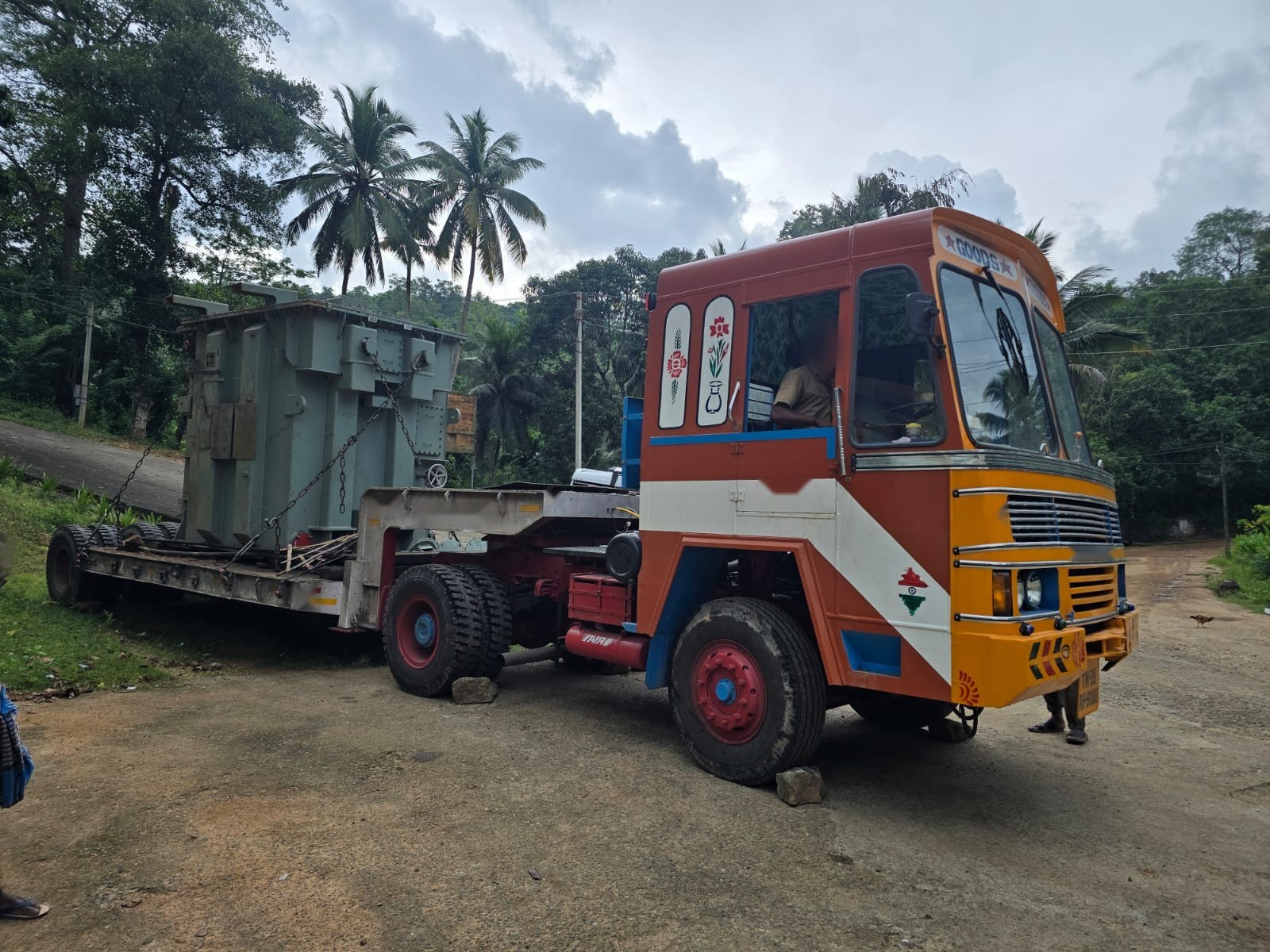
Transformers · Switchgear
Power transformers are among the most shock-sensitive road cargo there is — routing prioritises surface quality over distance.
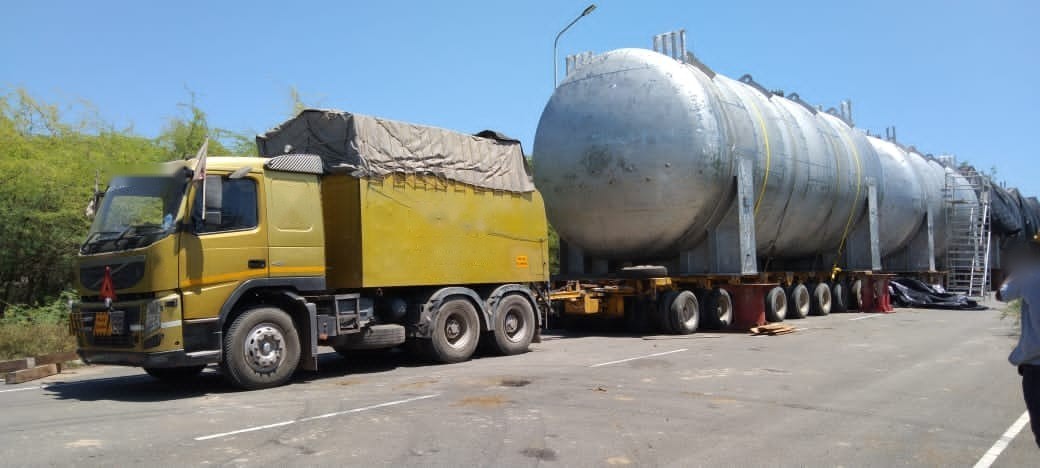
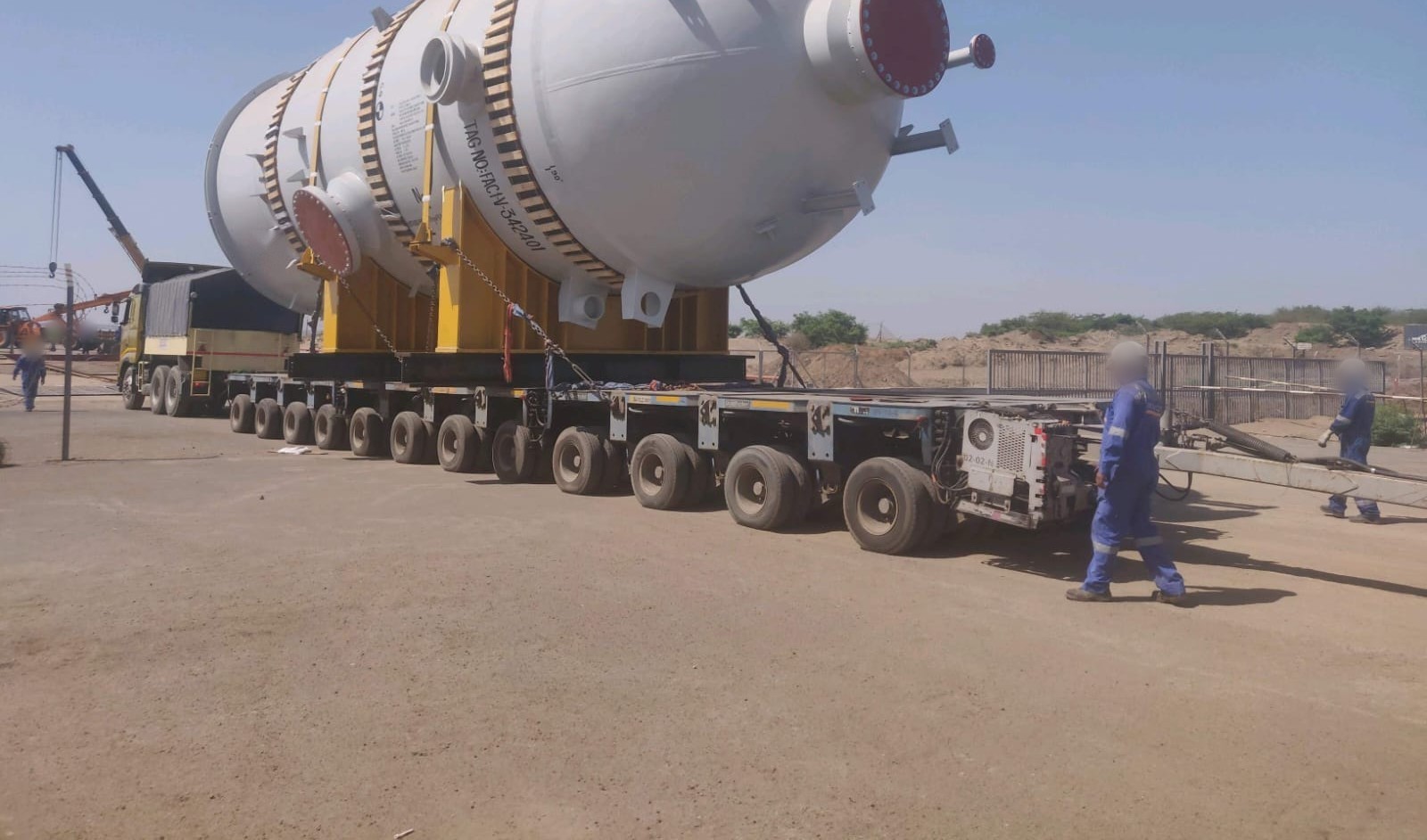
A column is one long piece of steel that cannot flex.
Process columns and vessels combine extreme length with almost no tolerance for bending stress. They ride on hydraulic axle lines that spread the load along the full deck, at speeds set by the corridor rather than the clock.
The hard part is rarely the highway.
Plants and substations sit where the project needs them, not where the roads are. The last few kilometres — gradient, camber, turning circles on narrow ghat roads — usually decide whether a movement is feasible at all.
Delivered in the order the crane needs it.
Vessels, columns and modules arrive sequenced to the lift plan, so the crane is never waiting on a trailer and cargo is never parked on site absorbing risk.
Corridors, not just destinations.
Heavy cargo moves along a small number of viable corridors between ports, fabrication hubs and project sites. Knowing which ones actually take the load is most of the job.
- Ports
- 11 mapped
- Industrial hubs
- 10 mapped
- Wind belts
- 5 mapped
Locations shown are the industrial hubs, ports and wind belts that oversized cargo moves between across India.
Tell us the cargo. We'll tell you the route.
Share the dimensions, weight, origin and destination — that is enough for us to tell you whether a movement is feasible and what it will take.
Maharashtra Office
Navi Mumbai – 410218, Maharashtra+91 22 4962 6364